I'm a Finnish-born illustrator and surface pattern designer, specialising in hand drawn botanical design, rooted in stories and cultural heritage. In this post I share how my surface patterns come to life - and why research and story-telling are at the core of my designs.
Published on:
April 4, 2022
My Surface Pattern Design practice
I'm a Finnish-born biophilic illustrator and surface pattern designer, based in West Yorkshire. My work draws from folklore, natural world - and years of research into the stories that landscapes, plants, and animals carry with them. The patterns and illustrations I create for brands are rooted in botanical world and cultural detail: everything starts with a story and the design emerges from that narrative.
I've built a portfolio of surface pattern work created as bespoke commissions for brands, with projects spanning print, giftware and premium product. Each design is created to tell a unique story or convey a feeling relevant to the bespoke brief.
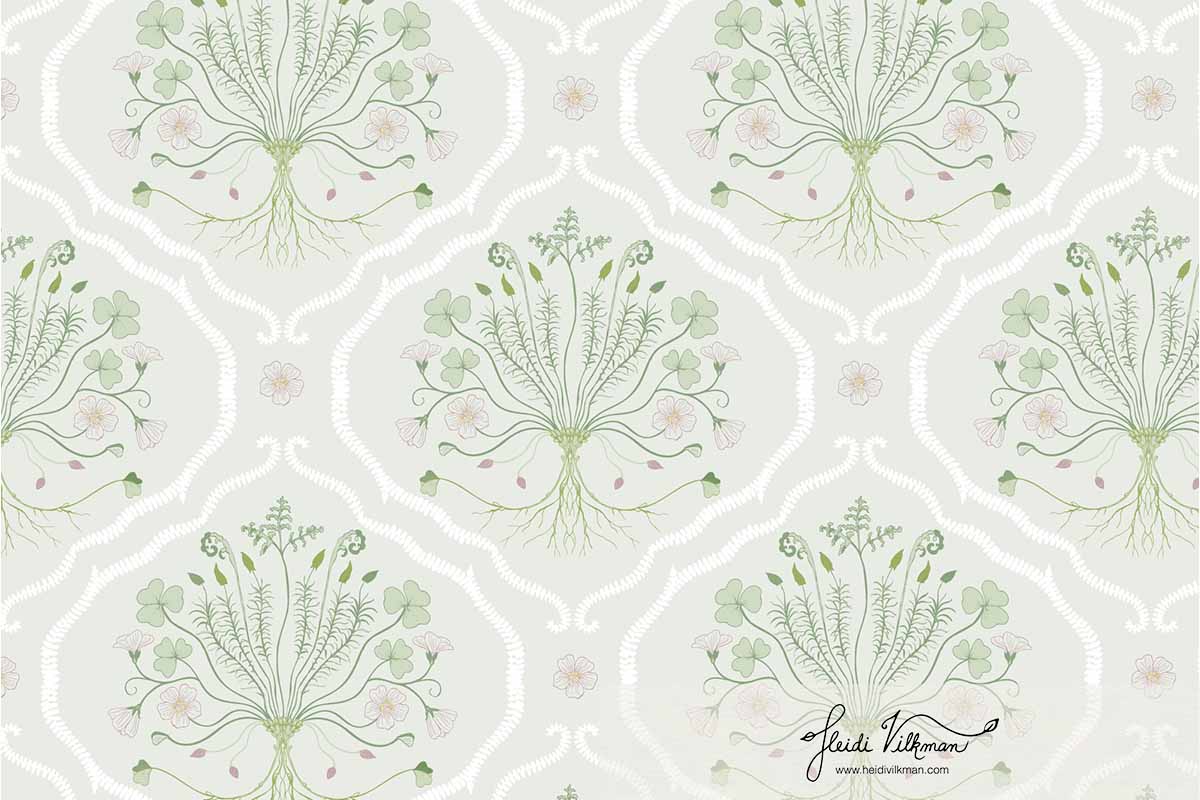
Hidden hero print, from my Forest Floor collection, is an example of my recent research-led botanical surface pattern design. Each of the three plants in the collection was studied, drawn from life and reference materials and assembled into seamless repeat patterns that connect to a story or an actual place. Every individual motif in the patterns had a reason to exist and was rooted back to the source story.
To ensure my designs are fully market-ready and thought out, I have developed a clear design process:
Research: botanical references, brand archives, folklore and connected stories
Document: Sketching and hand-drawing in pencil, ink, watercolour
Storytelling: Organising sketches in compositions in a way that supports story-telling
Assembly: Photoshop/Illustrator assembly, colour system, repeat construction
Output: Print-ready surface pattern designs for packaging, gifting and retail in multiple colourways.
By using this method, the designs are on-brand, timeless and not relying on fleeting trends. Every part of my process is thought out and intentional, ensuring that the collection is market-ready, whether for licensing or for bespoke brand commission.
The results this design process offers to my clients:
Brand-specific designs: every design is created around the brand's story and values
Timeless collections: designs are rooted in archives and identity, not trends
Specific art work: hand-drawn illustrations rooted in real botany
Visual identity: A distinctive visual language that belongs authentically to the brand
Market-ready assets: A production-ready design that works across multiple product categories.
My approach to surface pattern design was recently featured in Creative Boom alongside five designers. Read the full article here.
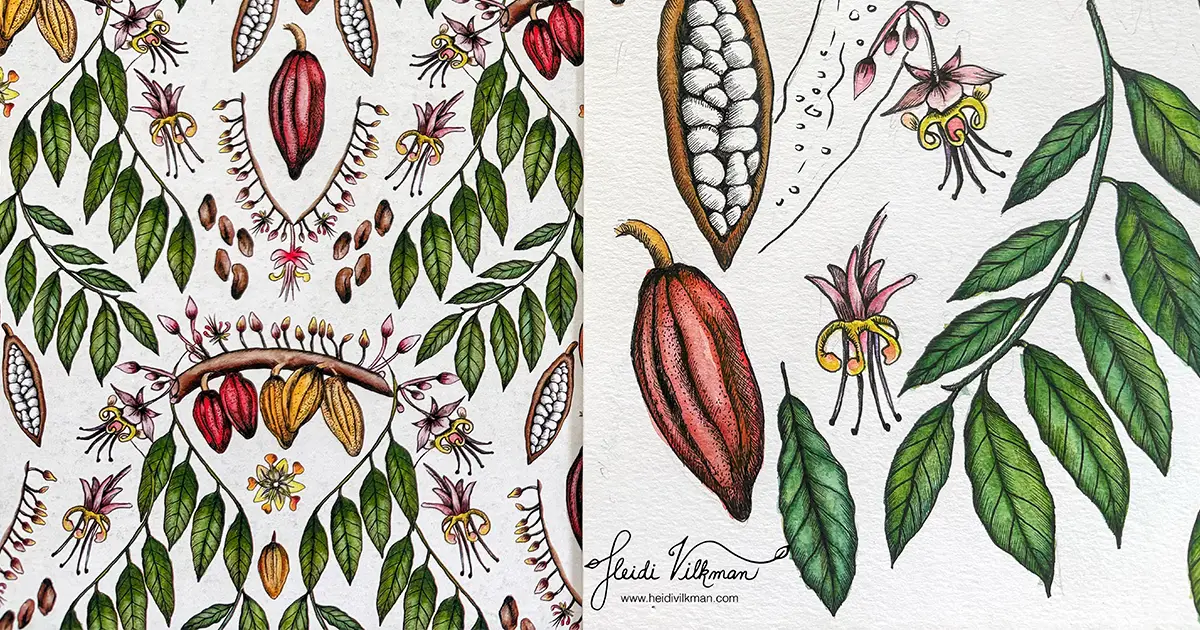
Cocoa Noir - from hand-drawn botanical illustration to surface pattern design and brand packaging, by Heidi Vilkman
My design workflow - Adobe Illustrator vs. Photoshop
When I first began my surface pattern journey, my focus was on building strong technical foundations and learning how to construct perfect, flowing vector repeats in Adobe Illustrator. Over the years I have been able to hone this technical skill and served a multitude of projects built as scalable vector.
Since then, through client commissions, my practice has evolved into something more research-led and narrative-driven. Where necessary, I deep-dive into the brand's origin and story, understanding that lasting surface pattern design is always rooted in something unique and genuine.
For the past few years, I have also worked extensively in Adobe Photoshop, creating seamless patterns from my original hand drawn botanical artwork and watercolour painting. The intricate detail and hand drawn texture that Photoshop allows in patterns, has been well suited to my expressive illustration style.
The choices and reasoning behind my design workflow:
Adobe Illustrator : infinitely scalable design, with an optimised colour palette, including Pantones, ideal for screen-printing. Loses some texture in the vectorising process, but offers a wider scope for licensing across multiple applications, printing methods and industries.
Adobe Photoshop: my preferred software for hand-painted designs with a lot of detail and texture. I now work mostly in Photoshop which ensures the delicate, hand-drawn ink lines and watercolour washes are preserved for the finished, manufactured print. Needs high quality scan resolution and only scalable depending on the original resolution. Large files, colours harder to alter. Suits digital printing method. My Kingfisher Wood pattern below is a great example of the use of Photoshop in creating a complex repeat pattern using hand-painted watercolour motifs.
Designing pattern collections and creating bespoke brand commissions
My repeating patterns are created for licensing or for bespoke brand commissions, to live on packaging, print, and product. I love the moment a design makes the leap from paper to the real world, to become part of a product or a brand story that customers can hold in their hands.
Working across different techniques has taught me how to adapt to each project's mood, message, and medium. With bespoke design work, it is important to choose the best approach to serve and convey the story. Above all, I believe design is a dialogue between imagination and professional method: the creative instinct to explore and a clear design process to deliver.
Berry Birds is an early example of my folk art influenced work - a pattern combining Finnish forest mythology and William Morris inspiration, built around movement, colour, and layered symbolism. Being Finnish, I feel a natural pull toward the folk art heritage of Northern Europe: its botanical influences, its mysticism - the sense that the natural world is always carrying complex stories just beneath the surface.
Movement and colour are fundamental to how I bring stories to life in pattern form. I assess every project individually, choosing the technique and medium based on what the design needs to carry. The brief is always central, but whatever the approach, every design begins the same way: hand drawn, on paper. In a world where gen-AI is becoming increasingly common, my choice to embrace hand-drawing is more deliberate than ever - read my thoughts on AI and surface design here.
Berry Birds repeat pattern is the hero design in my folk art-inspired collection. The complementary patterns share the same folklore world but offer a quieter voice to the busyness of the hero design. Together they give the collection a visual range to work across different scales and applications.
The Hero Design: A complex, narrative-driven pattern serves as the focal point of a collection. This pattern is heavily influenced by my Finnish childhood, combining forest mythology with a classic arts-and-crafts sensibility.
The Complementary Prints: To balance a complex hero print, I design less dense, secondary patterns. These share the same style and colour palette, but feature simpler coordinates that allow the collection more room to breathe and extend its commercial uses.
Berry Birds - a folklore-led surface pattern design by Heidi Vilkman
Birds in Bushes - a complementary pattern for Berry Birds collection by Heidi Vilkman
Hand-drawn design style
Each of my designs starts as a pencil sketch, which then evolves into a simple, graphic motif or a detailed illustration. For years, I’ve used the same mechanical pencil for drawing my sketches - it is a well-loved tool which travels with me everywhere. The sensory feeling of pressing the pencil on the surface of the paper is something I have never been able to repeat on iPad or digital tablet.
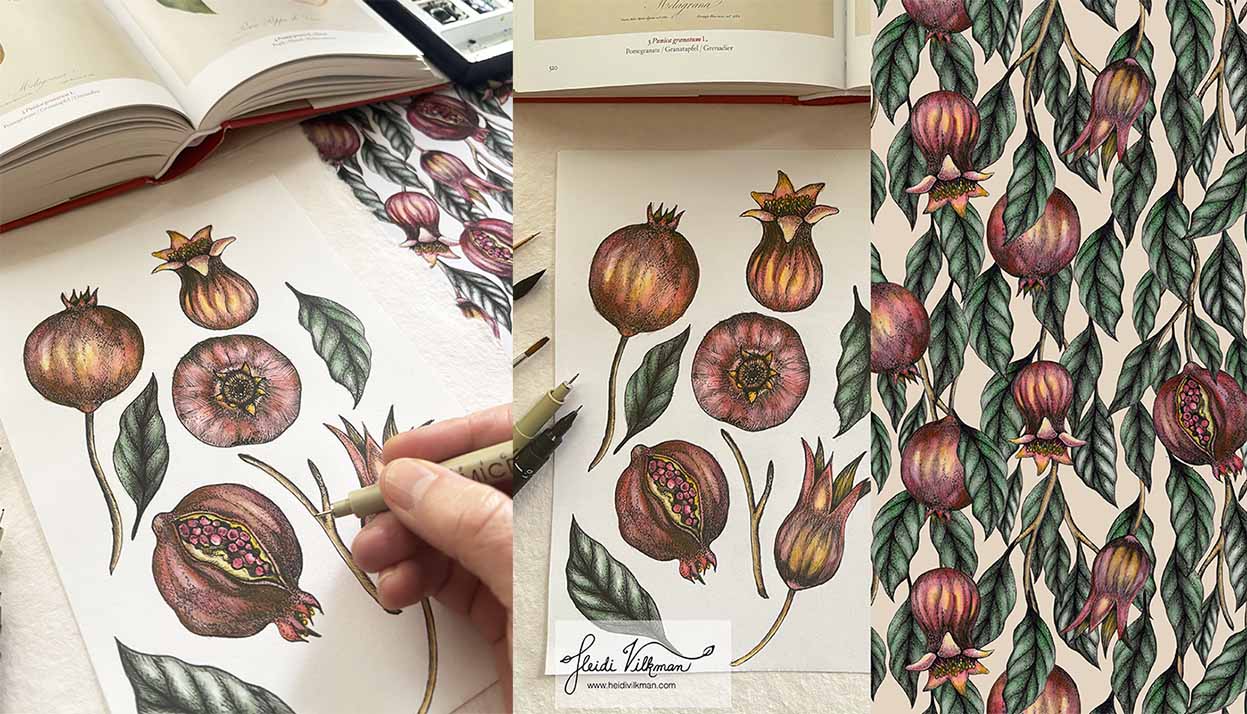
After finishing my pencil sketches, I refine the lines using ink markers of varying thicknesses. Sometimes I keep the drawings simple with clean outlines; other times I build up layers of detail, like in the Pomegranates design below. Once complete, I erase the pencil lines and scan the artwork in high resolution (600-900dpi) into my computer.
If I am working with watercolours, I add this layer over my ink work before scanning. Because I don't work in large scale and my ink line is intricate, scanning the artwork in high resolution guarantees every little detail is preserved for the digital pattern building in Photoshop. My creative process always begins in the analog world and ends digitally, which I find to be the perfect balance between originality and efficiency in design workflow.
Pomegranates pattern - from research to illustration to final surface pattern design by Heidi Vilkman
Design inspiration: Folklore and the natural world
Growing up in the Finnish forest, surrounded by folk tales, botanical world, and the changing seasons of the woodland, I developed a love for storytelling. The textures, shapes and ever-changing landscape made my creativity blossom (even if I found it at times boring as a child). Understanding how stories connect us to the world we live in, starting from the environment nearest to us, affected the way I wanted to create and portray my art. As much as I love creating beautiful and decorative botanicals, I also want to include my deep knowledge of the natural world, as part of the design's layers. A timeless surface pattern design comes from a real place, ideally a place which is lived and experienced - by you or the people before you. Surface pattern design is a wonderful way to tell stories of the past and present.
Currently based in Hebden Bridge, in a Yorkshire valley shaped by the rivers and ancient woodlands, I gather daily inspiration from my surroundings. I sketch colours, patterns, and textures from the landscape, which although very different from my Finnish childhood one, is equally rich in botanical detail, folklore and heritage. Stories connected to the landscape are one of the most abundant materials available to us designers, wherever in the world we are located.
I love using hand-drawn line and ink and watercolour texture to convey a story. Floral patterns, particularly flowers and small botanical details in natural landscapes give richness to a design and lift it beyond decoration. To understand my subject matter intimately, I have trained my eye and gained knowledge through seasonal foraging courses. Often during my wild forays, I either take photographs or pick plants and draw them at home with my daughter; nature is a timeless inspiration for us both.
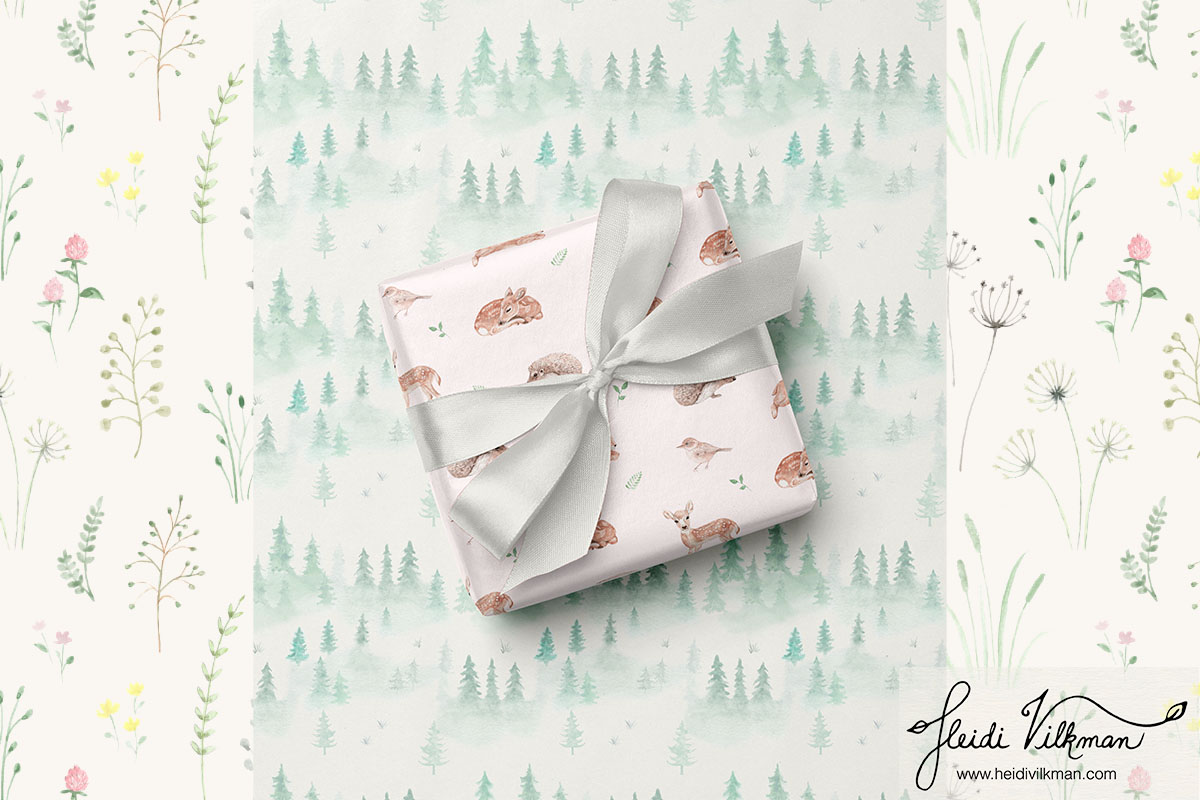
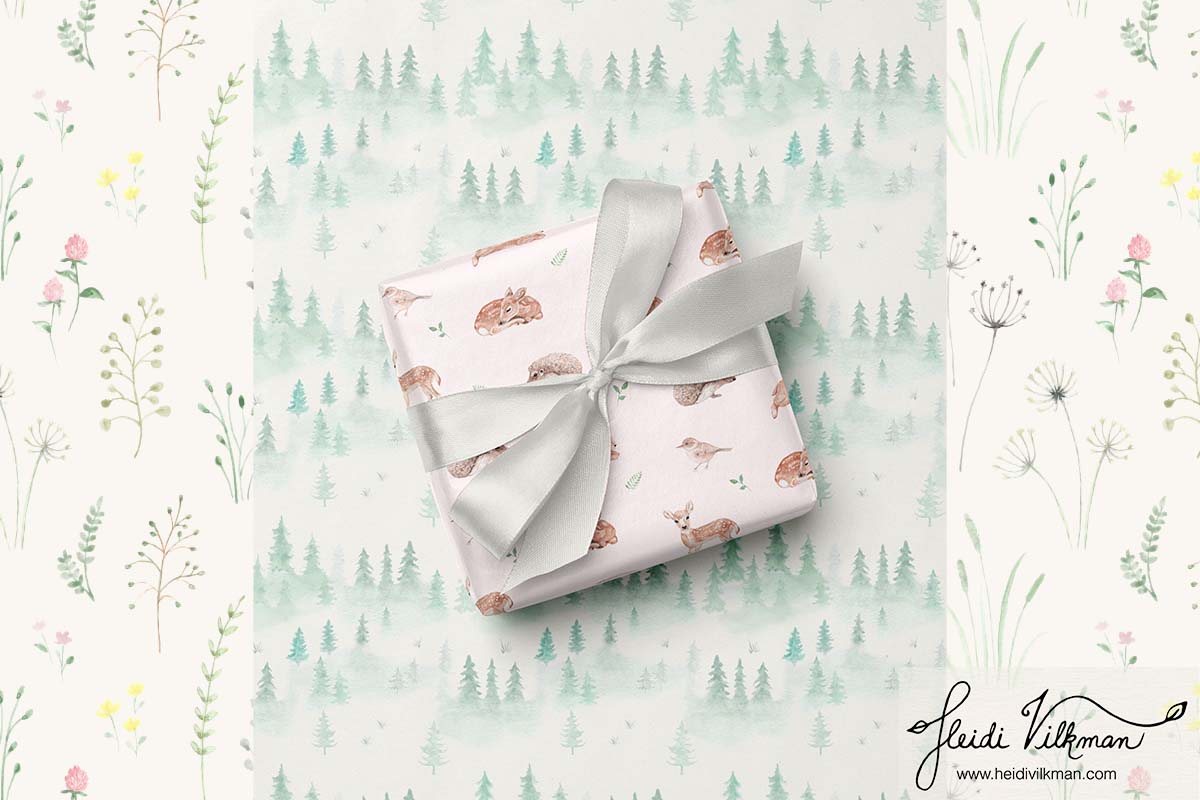
Nordic Forest - hand-painted watercolour collection licensed for a premium baby brand by Heidi Vilkman
Conclusion
Surface pattern design at its best goes beyond decoration - it is a powerful visual language built on research, craftsmanship and story. For luxury and artisan brands, that depth is what separates timeless brand-specific design from a decorative, passing trend.
If you are looking for a surface pattern designer whose work is rooted in hand-drawn botanical illustration and genuine research, I would love to hear about your project. Request to view my design folio or get in touch to discuss how my bespoke design services can help to elevate your brand.
About Heidi Vilkman
I am Heidi, a biophilic surface pattern designer. I combine a decade of design experience, a filmmaker's mindset, and my clear design method to help lifestyle brands stand out with considered, human-made design.
Why is the luxury world abandoning AI? Explore the rise of hand-drawn botanical illustration as the new marker of exclusivity and authentic brand storytelling.