
What is Surface Pattern Design?
In this blog post, I examine what is surface pattern design, its history and my own approach towards this wonderfully diverse art.
Published on:
February 2, 2022
In this blog post, I examine what is surface pattern design, its history and my own approach towards this wonderfully diverse art.
February 2, 2022

I am Heidi Vilkman, an illustrator and surface pattern designer. My art is influenced by my Nordic roots, folktales and the beauty of nature around me.
I have been making marks since I was little. The act of creating colours, textures and stories on various surfaces and materials, contains the magic I see in the world. There is something truly wonderful about taking an idea in one’s head and following it through research and drawing and iteration, and arriving at something that holds meaning as well as beauty.
Surface pattern design is design applied to a surface - packaging, fabric, ceramic, wallpaper, stationery, and almost any product you encounter in daily life. The term refers specifically to a repeating design that tiles seamlessly across a material. It is one of the most widely encountered forms of design in the world, and also one of the least examined - present on nearly every object we pick up, yet rarely considered for the craft and thinking it requires.
For brands, a well-designed surface pattern is far more than decoration. It is a visual language that communicates character, history, and values at a glance - often before a single word is read, or said.


William Morris (1834-96) is widely regarded as a pioneer in the field of surface pattern design. His intricate and skilful designs in fabric and wallpaper gave rise to the arts and crafts movement in Britain, in the 19th century. Morris was a multi-disciplinary artist, but in all his creative endeavours, he emphasised the value of aesthetics and craftsmanship, as a contrast to mass production and often soulless design of the time. As a politically active man, and believing in socialist principles, Morris felt strongly about inequalities of the Victorian society. He wanted his art and designs to be available to all social classes.

Despite being made a few centuries ago, William Morris’s surface pattern designs are still highly valued, and regarded as timeless. His legacy endures because his designs were rooted in close observation of the natural world, genuine skill, and a point of view. That combination of botanical depth, storytelling, and craftsmanship continues to influence designers working today, including me.
Growing up in Finland, I was surrounded by a visual culture that moved between the bold minimalism and the nostalgic romanticism. My mother worked as a pattern cutter and seamstress at a furniture company and our house was always full of fabric off cuts, including those of Finnish design houses: Marimekko, Vallila and many others. The timeless, somewhat abstract patterns of the 1960's, symbolically portray the heart of the Nordic design, which decades later regained popularity with the masses, due to its retro feel.

But alongside those modern patterns, I was equally drawn to an older layer: Finnish and Nordic folk art, with its woodland mythology, its creatures and botanicals, its stories woven into textiles and carved into wood. Florals, animals, and a deep connection to nature and forest mythology have always been primary sources of inspiration - not as surface decoration, but as a visual language carrying our cultural memory.


Outside of Nordic influences, I also remember the complex floral patterns of Italian fabric manufacturers that passed through my parents' hands - fabrics that would eventually cover sofas and settees and transform a space into a home. Flowers and botanical designs, as well as stories rooted in our past and folklore, have always connected us to the world outside our walls. I see them as an expression of biophilic design principles - the human instinct to seek nature connection. Interpreting that connection, between the interior and the living world, is at the root of everything I make.
I have been making art for as long as I can remember. Since moving to the UK over twenty years ago, my creative practice has grown towards what it is now: illustration and surface pattern rooted in folklore, botanical research and rich storytelling in design.
My childhood landscapes and cultural heritage from two countries (UK and Finland) have always shaped my creative approach. I often choose subject matter, which is rooted in folk tales or mythology, because the stories show a layered richness to our existence. The most consistent source of inspiration is the natural world around me, what I see on my daily walks, how nature transforms over different seasons. I love to research specific ecological stories behind plants and creatures. Every design begins with research - understanding what a plant, animal or a place meant to the people who interacted with it.
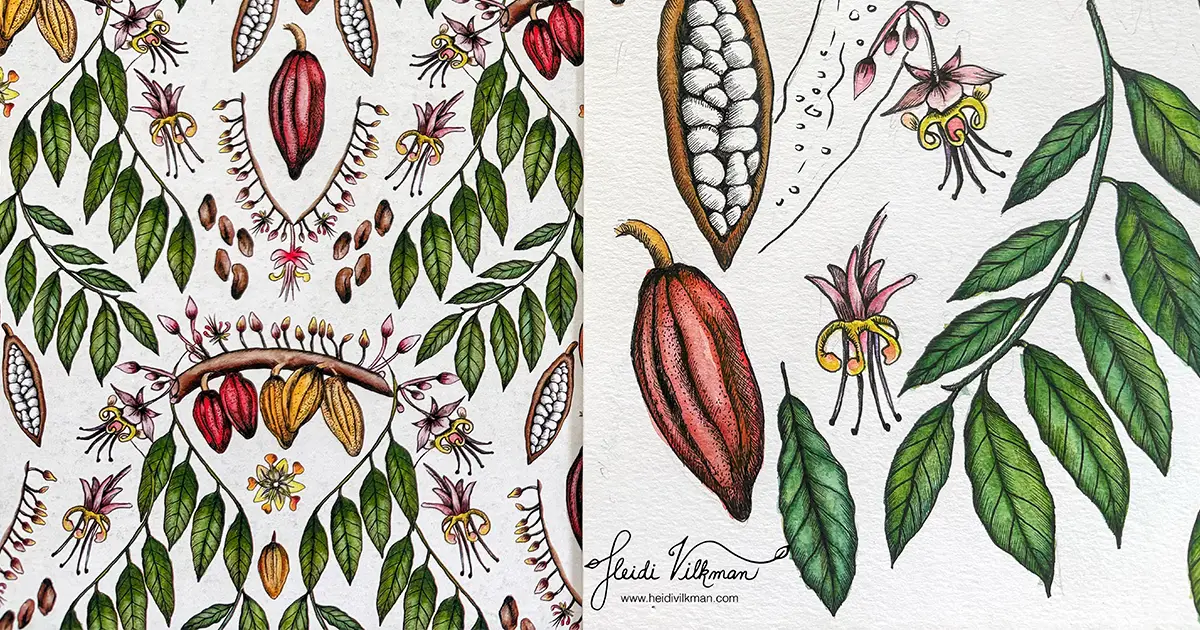
From hand-drawn sketch to finished pattern, the process moves through ink, colouring and digital refinement. The hand-drawn quality is always the starting point, which will remain as evidence of craftsmanship that remains present in the finished design, whatever form it takes.
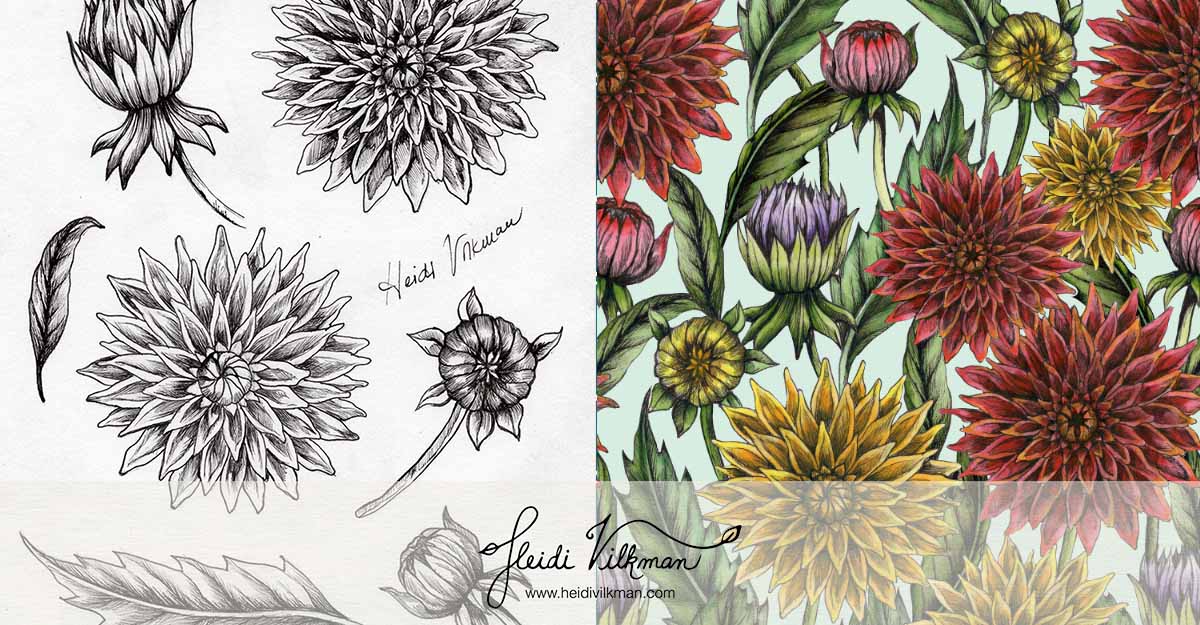
Surface pattern design is one of the most versatile tools to express story and beauty across printed products. For luxury and artisan brands, surface pattern design offers a way to express identity in an authentic and creative way - on packaging, stationery, tableware and other product lines. A pattern genuinely rooted in a brand's story, rather than applied as an afterthought, creates recognition and emotional resonance that outlasts any trend. When I work with brands with surface pattern and illustration, the process is built equally on research and craftsmanship -researched, hand-drawn, and specific to the story the brand is telling. The final surface and printing method of the product changes the design and colour process, whether it is screen-printed with Pantones or contains millions of colours for digital printing.
My approach to every project starts with research, first and foremost, even before my pencil hits the paper. I choose a theme and research the ecological and cultural stories behind it, the mood I am trying to convey, the colour palette that will portray the story in the best way. I write down notes, I search for reference images and articles, and only then I start sketching. Pattern design is a wonderful way for me to combine illustration and story-telling with suggestive, and often quite symbolic elements, from the natural world and cultural stories, from my own life as well as beyond.
The same depth of research informs my portfolio designs, which are available for licensing to brands looking for ready-made work that still carries the quality of craftsmanship and genuine story-telling.
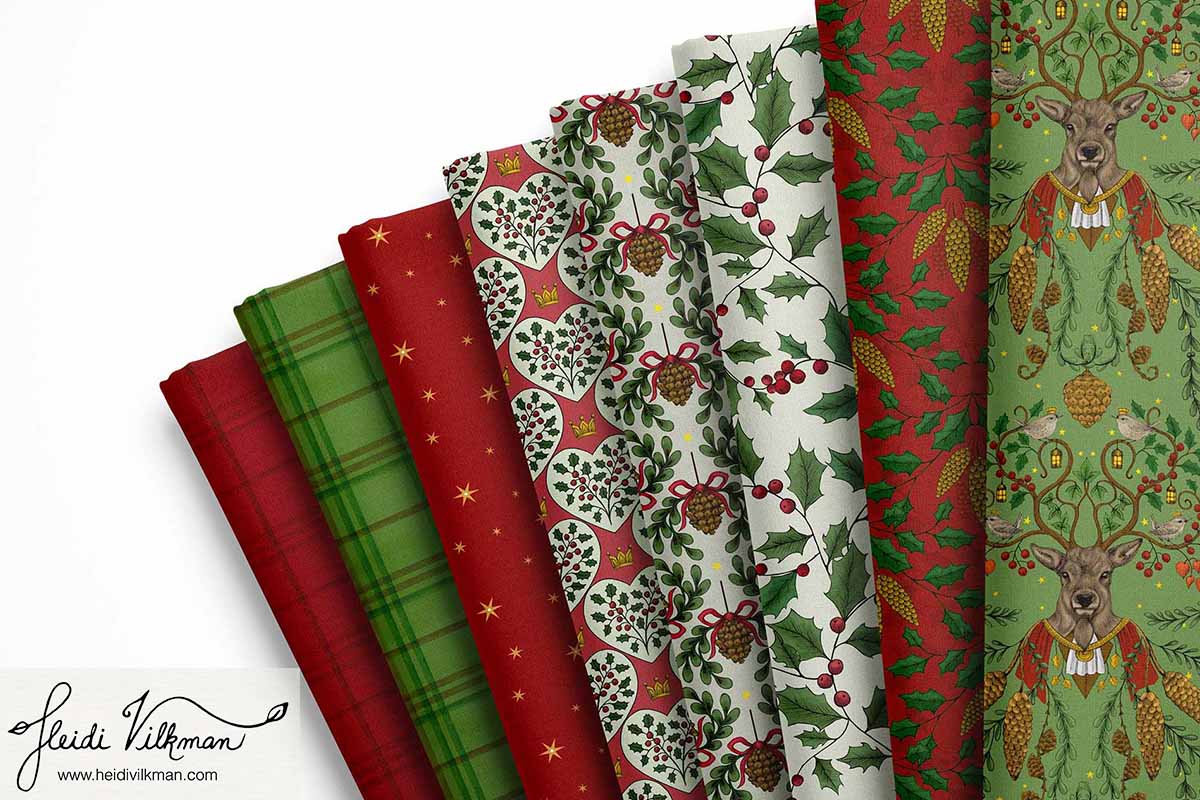
Alongside individual commissions, I often work in collections of repeating patterns. A collection typically includes one or two hero patterns and several complementary designs, all thematically connected but offering different scales, compositions, and points of view on the same subject. For a brand, this means a coherent visual world rather than just a stand-alone single pattern. Collection prints are versatile because they can be used consistently across packaging, print, and product.
Each collection begins and ends with the story. The hero pattern carries the full weight of the narrative; the complementary patterns offer quieter, supporting voice - and the simplest of all - the blender pattern is like a beautiful background noise. Together they create depth to the chosen theme - which will convey not only beauty but also genuine storytelling. That is how the best surface pattern collections carry their meaning - not by being a decoration, but by telling a story.
I am Heidi, a biophilic surface pattern designer. I combine a decade of design experience, a filmmaker's mindset, and my clear design method to help lifestyle brands stand out with considered, human-made design.
Request to view my portfolio or get in touch to discuss your project.
 Why Luxury Brands Are Moving from AI to Hand-Drawn Illustration